Distributor programs
Compare landed margin, packaging, spare parts and channel fit before adding another desk line.
Standing desk wholesale · supply verification
UPARO helps distributors, private-label brands and project furniture buyers define products, compare suppliers, validate samples and match exact-model evidence before volume.
No factory-direct claim. No generic certificate wall. No volume recommendation before comparable evidence.

Who we are building for
Price matters, but it is only comparable after the product, packing, service and evidence scope are made visible.
Compare landed margin, packaging, spare parts and channel fit before adding another desk line.
Align structure, finish, controls, tabletop interfaces and evidence to one written project baseline.
Review installation, site constraints, replaceable parts and documentation before the project schedule is fixed.
Coordinate frame, locally sourced tabletop, fixing pattern, cable routing and final packing as one system.
Program structure
Each category carries a visible status. Products move from concept to supplier review, sample verification and project RFQ only when the evidence supports it.
Two-leg, three-stage and project-specific frame directions prepared for comparable supplier RFQs.
Complete-desk supply can be reviewed when tabletop, packing, destination and service responsibilities are defined.
Motors, control boxes, handsets, power configuration and exact-model documents are matched before claims are published.
Cable trays, power-board zones, accessory clearances and service access are reviewed with the tabletop interface.
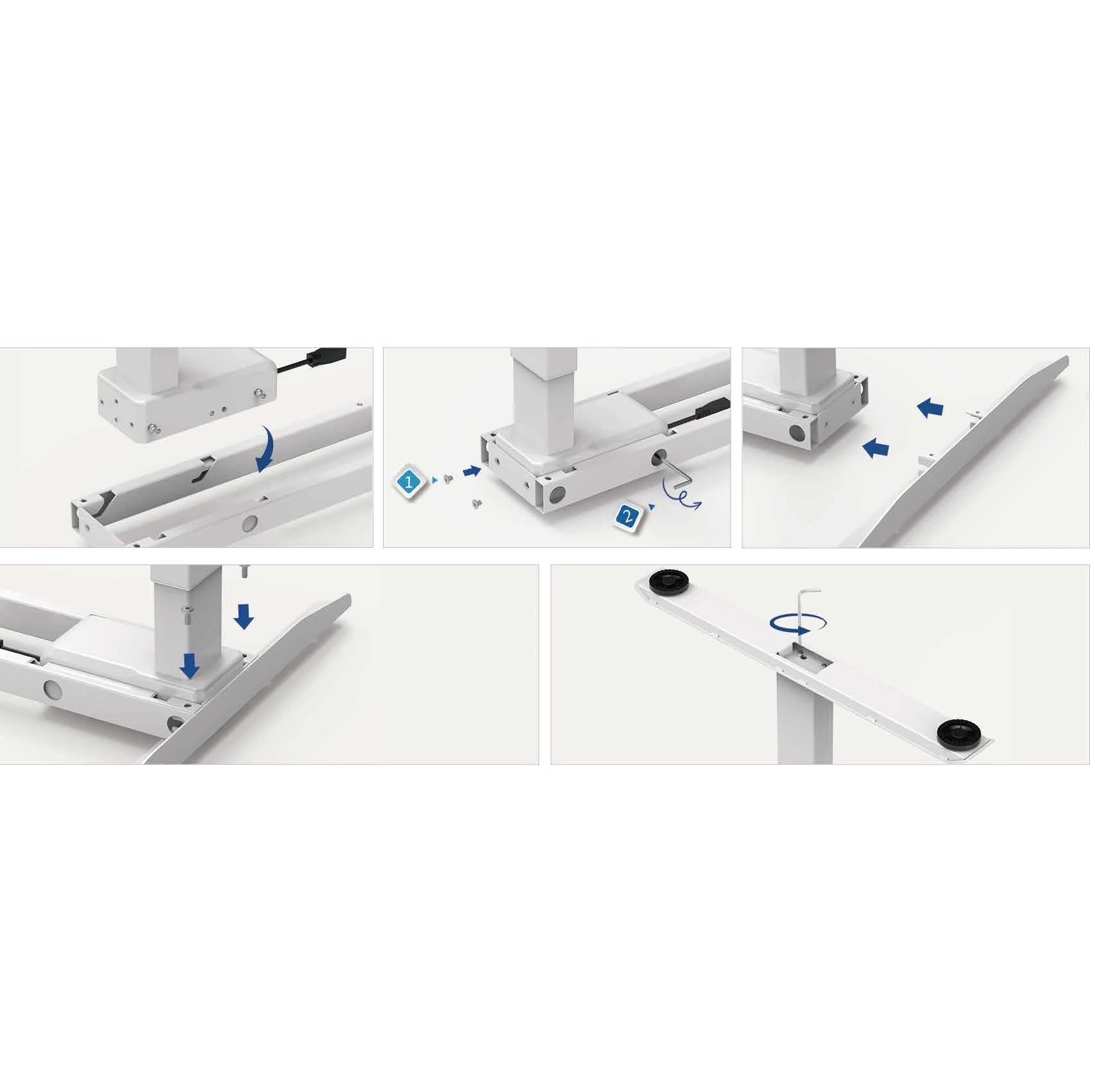
Dimensions, weight, material, fixing layout and edge clearance are captured before sampling.
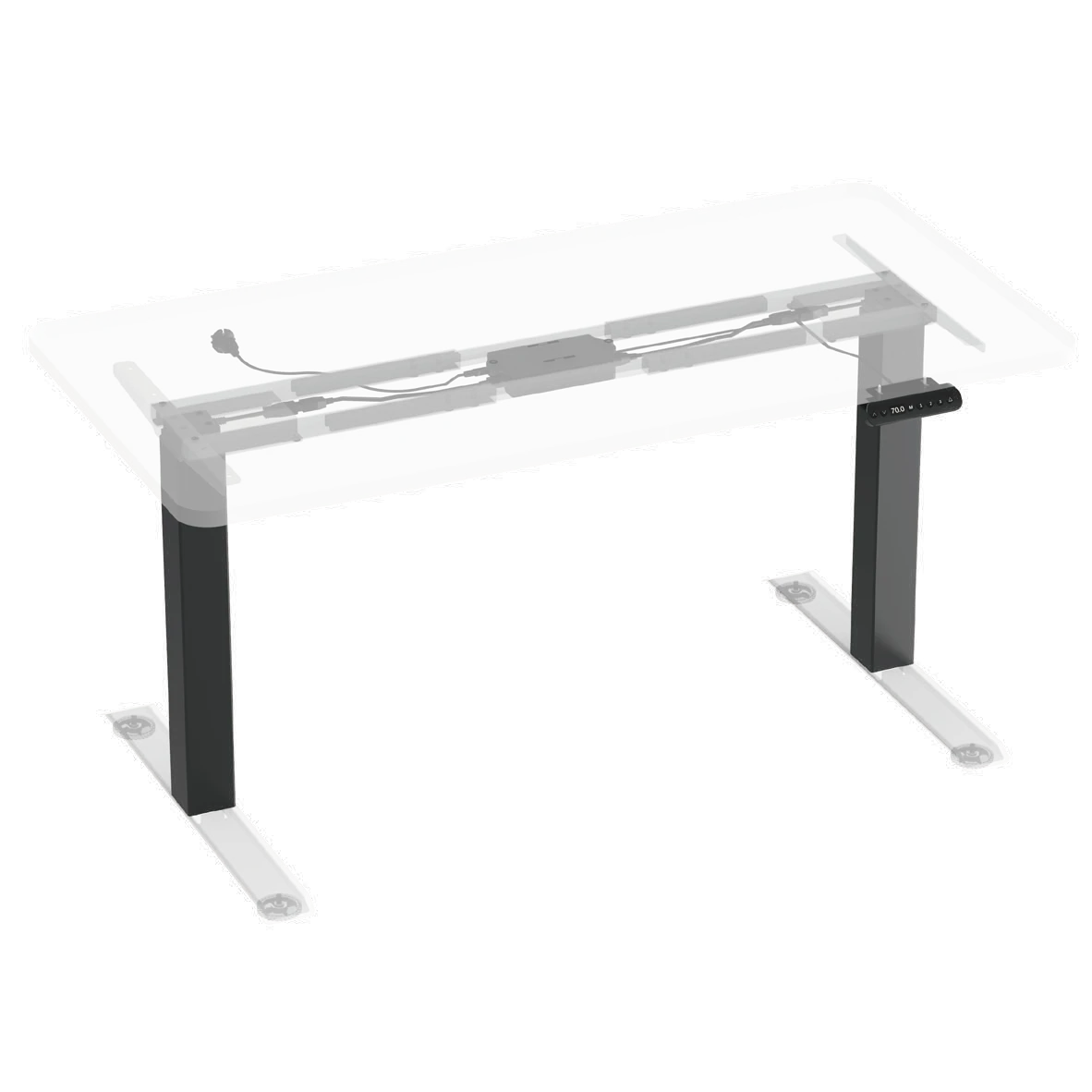
A modular dual-motor, three-stage T-leg direction for RFQ comparison and local tabletop integration.
All figures are design targets. Final specifications, pricing, MOQ, lead time, compliance and availability require written supplier confirmation and physical validation.
Open the product status frameworkEvidence center
A mature product page should show what is known, what is still supplier-provided and what has been physically checked.
Create one comparable baseline for product, packing, commercial and document requirements.
Separate included scope, options, exclusions, spare parts and written commercial terms.
Check assembly, finish, controls, noise, packaging and behaviour at intended working heights.
Confirm supplier, exact model, configuration, report holder, date, scope and limitations.
Use sample findings and signed terms to decide whether a small paid pilot is justified.
Claims policy
For manufacturing partners
UPARO asks for legal identity, exact-model specifications, production and test evidence, packing data, commercial terms and authorised media. Submitting information does not create certification, exclusivity or an order commitment.
Submit supplier informationFrequently asked
These answers are intentionally conservative while supplier, product and commercial validation remain incomplete.
UPARO is a standing-desk supply program operated by Ningbo Mantai Intelligent Technology Co., Ltd. We coordinate product definition, supplier comparison and validation, but do not claim that every product is made in an operator-owned factory. The exact production entity, contracting entity and each party’s responsibility must be disclosed in a written quotation.
Not yet. The current AU-PRO-T150 material is a visual concept and RFQ baseline. Physical sample validation, supplier DFM, commercial terms and exact-model evidence are still required.
The initial focus is modular frame programs and local or project-specific tabletop integration. Complete-desk supply can be reviewed when the destination, packing and service scope make it commercially sensible.
A certificate or report is recorded only with its holder, exact model, configuration, issue date, scope and limitations. A document for a similar model is not treated as automatic proof.
The request is reviewed for missing specifications. The next useful step may be a comparable supplier quotation, drawing review, paid sample or pilot discussion—not an automatic volume-order recommendation.
Next useful step
Tell us the buyer, destination, quantity, tabletop plan and main risk. We will use that information to identify the next validation step.